

Short answer: Colombia’s Caribbean is much more than beaches. In a week or two you can walk the colonial streets of Cartagena, paddle through mangroves with the fishermen of La Boquilla, relax on the islands of the Rosario and San Bernardo archipelagos, travel back in time in Mompox on the Magdalena River, hike through the jungle of Tayrona and the Sierra Nevada de Santa Marta to the Lost City – and dive the reefs of Providencia. This guide explains each place, how to get there and how to combine them.
Cartagena
Cartagena de Indias is one of the most beautiful colonial cities in the Americas. Its walled old town, a UNESCO World Heritage Site since 1984, is a maze of balconies covered in bougainvillea, churches, squares and convents. Highlights are the church and square of San Pedro Claver, the Clock Tower, the walls at sunset and the Castillo de San Felipe. Next door, Getsemaní – once a workers’ quarter – is now the city’s most colourful neighbourhood, full of street art, small restaurants and music on the Plaza de la Trinidad in the evening. You will also meet the palenqueras, women from San Basilio de Palenque in bright dresses selling tropical fruit.


La Boquilla: mangroves and fishermen
Just 20 minutes north of the old town, the Afro-Colombian fishing village of La Boquilla lies between the sea and a lagoon lined with mangroves. With local fishermen we glide by canoe through narrow mangrove tunnels, watch herons and kingfishers, learn how the families fish with traditional nets and how the mangroves protect the coast. It is a calm, authentic contrast to the busy city – and the income goes directly to the community.

The islands: Rosario and San Bernardo
South-west of Cartagena, two small archipelagos offer turquoise water and coral reefs. The Rosario Islands, part of a national park, are about an hour away by boat and popular for day trips. Further out, the San Bernardo archipelago is quieter. Our favourite place there is Punta Faro on Isla Múcura, about two hours from Cartagena by speedboat: a relaxed island resort surrounded by palm forest, with calm water for snorkelling right from the pier, a turtle conservation project and boat trips to see bioluminescent plankton at night. It is the perfect way to end a trip through Colombia – our 14-day Amazon, indigenous people and Caribbean tour finishes with several days at Punta Faro.

Mompox: a colonial town on the Magdalena River
Santa Cruz de Mompox, a UNESCO World Heritage Site since 1995, was once a rich river port on the Magdalena. Today it is a quiet town where time seems to stand still: whitewashed houses with iron window grilles, rocking chairs on the pavements in the evening, the yellow church of Santa Bárbara and a long riverside promenade. Mompox is famous for its fine silver filigree jewellery and its Holy Week processions. Don’t miss a boat trip at sunset through the river and the wetlands (ciénagas), rich in herons, kingfishers and iguanas. By road, Mompox is about 5–6 hours from Cartagena, so plan at least two nights.


Santa Marta, Tayrona and the Sierra Nevada
Santa Marta, founded in 1525, is one of the oldest cities in South America and the gateway to two of Colombia’s great natural treasures.
Tayrona National Park
East of Santa Marta, Tayrona combines jungle, giant granite boulders and golden beaches. Trails lead through the forest – where you may see capuchin and howler monkeys – to beaches such as Arrecifes, La Piscina and Cabo San Juan. Many beaches have strong currents: swim only where it is allowed. Tayrona is a sacred place for the indigenous peoples of the Sierra Nevada and closes three times a year so that nature can recover – in 2026 from 1–15 February, 1–15 June and 19 October to 2 November. It can also close at short notice, so we always check before your trip.

The Sierra Nevada de Santa Marta and the Lost City
The Sierra Nevada is the highest coastal mountain range in the world, rising from the Caribbean to snow-capped peaks of over 5,700 metres. It is home to the Kogi, Arhuaco, Wiwa and Kankuamo peoples, who see themselves as guardians of the balance of the world. In the foothills, the village of Minca is known for coffee farms, waterfalls and excellent birdwatching. Deep in the jungle lies Ciudad Perdida, the Lost City, built by the Tayrona people centuries before Machu Picchu. It can only be reached on foot – a trek of several days through rivers and rainforest, with a long stone staircase at the end. See our Lost City trek.

San Andrés and Providencia
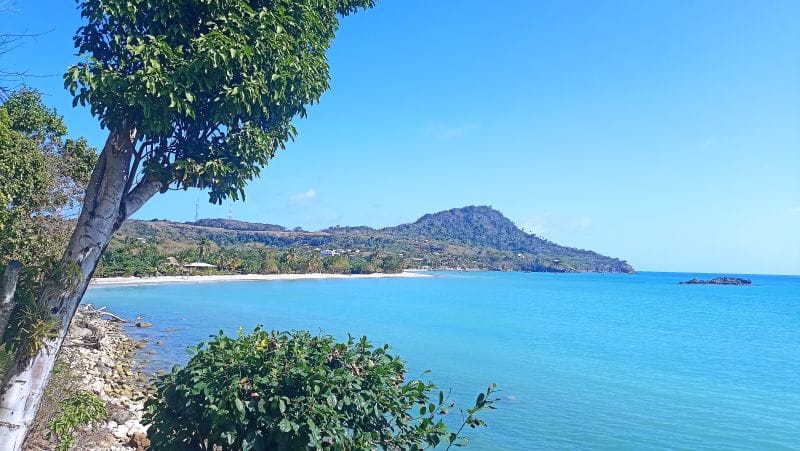
Far out in the Caribbean, closer to Nicaragua than to the Colombian mainland, lies the archipelago of San Andrés, Providencia and Santa Catalina – part of the Seaflower Biosphere Reserve, with one of the largest barrier reefs in the Americas and the famous “sea of seven colours”. San Andrés is lively and busy; Providencia is its quiet, green sister, with English-Creole culture, hills covered in forest, empty beaches and superb diving with reef sharks, turtles and huge schools of fish. After Hurricane Iota in 2020 the island was rebuilt and welcomes visitors again. You reach Providencia from San Andrés with a short Satena flight or by catamaran. See our Providencia diving trip.
Best time to visit
The Caribbean coast is hot all year, usually 28–32 °C. The driest months are December to April, with sunshine and a refreshing breeze; there is a shorter dry spell in July and August. September to November are the wettest months, with heavy but usually short showers. Hurricane season in the Caribbean runs from June to November, although storms rarely reach the Colombian coast. Christmas, New Year and Holy Week are high season – book early. More in our guide to the best time to visit Colombia.
Getting there and around
- Flights: Cartagena (CTG), Santa Marta (SMR) and San Andrés (ADZ) have direct flights from Bogotá and Medellín; Cartagena also has international flights.
- By road: Cartagena to Santa Marta takes about 4–5 hours; Mompox is about 5–6 hours from Cartagena.
- By boat: about 1 hour to the Rosario Islands and about 2 hours to Múcura in the San Bernardo archipelago.
- Providencia: via San Andrés, by plane (Satena allows 15 kg of checked baggage plus 5 kg of hand luggage) or by catamaran. More in our guide to getting around Colombia.
How many days do you need?
- 4–5 days: Cartagena, La Boquilla and a few days on an island such as Múcura.
- 7–10 days: add Mompox or Santa Marta with Tayrona and Minca.
- 2 weeks: combine the coast with the Lost City trek or a week of diving in Providencia.
Tips for the Caribbean coast
- Light, breathable clothes, a hat, reef-safe sunscreen and mosquito repellent are essential – see our packing list.
- Bring cash for the islands and small villages; card payments are not always possible. More in money in Colombia.
- Respect the indigenous communities of the Sierra Nevada: ask before taking photos – see our guide to culture and etiquette.
- Read our tips on safety in Colombia.
Plan your Caribbean trip with us
We have been organising trips and diving expeditions in Colombia for many years and know the places, boat captains, guides and small hotels personally. We combine the Caribbean with Medellín, the coffee region or the Amazon to suit you. Ask for your itinerary or write to us on WhatsApp.
Last updated: November 2026. Park closures and boat schedules change – we check the current situation before every trip.


