
Short answer: the driest months in most of Colombia are December to March and July to August. But Colombia sits on the equator, so there is no summer or winter – the weather depends far more on altitude and region than on the calendar. That means there is a good place to travel in Colombia in every single month. This guide shows you where, written by our local team in Antioquia, planning tailor-made trips since 2009.

Why Colombia has no single “best season”
Most of the Andean and Caribbean regions have two dry seasons (roughly December–March and July–August) and two rainier seasons (roughly April–May and October–November). Even in the rainy months, rain usually comes as a strong afternoon shower, and mornings are often clear.
Temperature is set by altitude, not by the month:
- Hot lowlands (0–1,000 m): Caribbean and Pacific coasts, Amazon, Llanos – around 26–32 °C all year.
- “Eternal spring” (1,000–2,000 m): Medellín, the Coffee Region, Jardín, Jericó – around 18–26 °C.
- Cool highlands (2,000–3,000 m): Bogotá, Villa de Leyva, the páramos – around 8–19 °C, cold at night.
So in one trip you may need shorts for Cartagena and a warm jacket for Bogotá – whatever the month.
Colombia month by month
| Month | Weather in most regions | Highlights and things to know |
|---|---|---|
| January | Dry, sunny | High season, especially the first two weeks (Colombian holidays). Great for the Caribbean, Andes and Llanos. Hammerhead season at Malpelo. |
| February | Dry, sunny | One of the best months overall. Carnaval de Barranquilla (6–9 February 2027). Tayrona Park usually closes 1–15 February. |
| March | Mostly dry, rain starts late in the month | Holy Week (21–28 March 2027) – busy and pricier. Still excellent for the Caribbean and Providencia. |
| April | Rainier in the Andes | Green landscapes, fewer visitors. Good for the Caribbean coast and Providencia diving. |
| May | Rainier in the Andes | Low season and good prices. Malpelo: hammerheads and the start of the silky shark season. |
| June | Drying out in the Andes | Colombian school holidays start mid-June. Tayrona usually closes 1–15 June. Caño Cristales season begins. |
| July | Dry in Andes and Caribbean | Humpback whales arrive on the Pacific coast. Popular month with European families. |
| August | Dry, sunny | Feria de las Flores in Medellín (around 30 July–8 August 2027, dates to be confirmed). Peak whale watching. |
| September | Rain increasing | Peak whale watching. The Lost City trek is closed all month. Fewer crowds elsewhere. |
| October | Rainiest month in many regions | Last whales. Tayrona usually closes 19 October–2 November. Good value for flexible travellers. |
| November | Rainy, then drying | Quiet month with low prices. Caño Cristales season ends. Hurricane season ends on San Andrés and Providencia. |
| December | Dry from mid-month | Christmas lights in Medellín, festive atmosphere everywhere. Book early for the last two weeks. |
Best time to visit each region
Medellín and Antioquia
Medellín earns its name “city of eternal spring”: around 22 °C on average, all year. December–March and July–August are the sunniest months for day trips to Guatapé and El Peñol, the coffee villages of the southwest or the Silletero flower farms of Santa Elena. In August the whole city celebrates the Feria de las Flores – book well ahead. For more detail, read our guide to the best time to visit Medellín.

Coffee Region (Salento, Cocora, Jardín)
The coffee towns lie between 1,300 and 2,000 m and stay green all year thanks to regular rain. The dry months make hikes in the Cocora Valley and coffee-farm visits easier. The main coffee harvest in Antioquia and the Coffee Region runs roughly from September to December, with a smaller harvest (the mitaca) around April–June – so the rainier months are also when you see the picking in full swing. Our 6-day Medellín and Andean Mountains tour combines both.
Bogotá, Villa de Leyva and Boyacá
Bogotá is cool (about 14 °C on average) and can bring rain in any month, so pack layers and a rain jacket. December–February is the driest, sunniest period for Villa de Leyva and the Boyacá highlands.
Cartagena and the Caribbean coast
Hot all year (around 28 °C). The driest and breeziest months are December–April; July–August is a second good window. September–November brings the most rain and humidity, but also fewer visitors.
Santa Marta, Tayrona and the Lost City
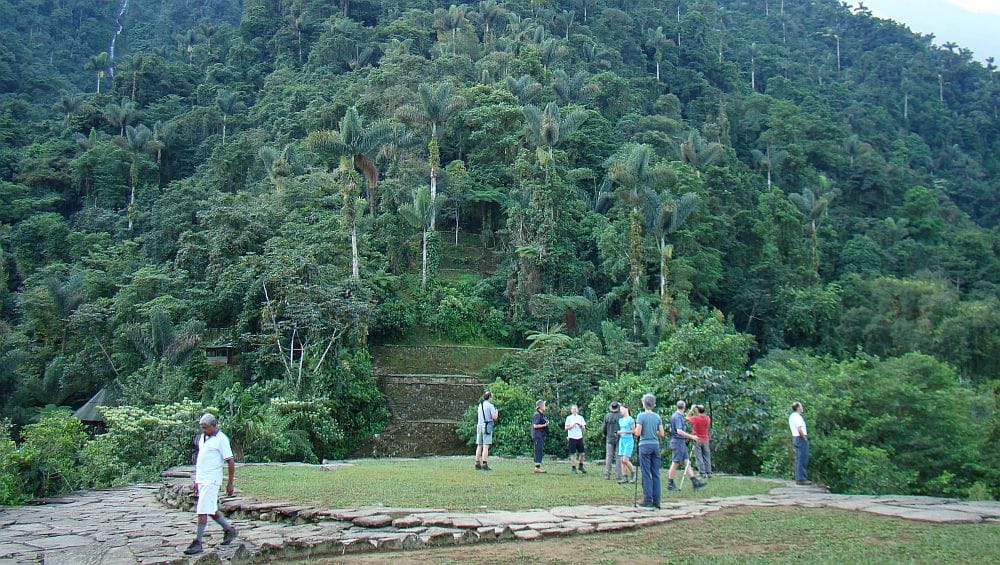
December–March is the most comfortable time for the Lost City trek, with drier, less muddy trails. The trek is closed every September, when the indigenous communities of the Sierra Nevada hold ceremonies at Teyuna. Tayrona National Park normally closes three times a year (in 2026: 1–15 February, 1–15 June and 19 October–2 November) and can close at short notice, so we always check before confirming a trip.
Pacific coast (Nuquí, Bahía Solano, Gorgona)
The Chocó Pacific is one of the rainiest places on Earth – expect rain in every month. The reason to come is the humpback whale season from July to October, with the most whales in August and September. Join our Gorgona whale watching experience or read more about whale watching in Colombia.

Amazon (Leticia)
It rains year-round in the rainforest, so there is no bad month – only a different experience. During high water (roughly December–May, highest around March–April) you explore the flooded forest by canoe; during low water (roughly July–November) river beaches and walking trails appear. Our 14-day Amazon, indigenous cultures and Caribbean tour works in both seasons.
Llanos Orientales and Caño Cristales
In the Llanos, the dry months of December–March are the best for wildlife: animals gather around the remaining water, which makes capybaras, caimans and giant anteaters easy to see on our Orinoco Wild Safari. Caño Cristales, the “river of five colours”, can only be visited in its season, roughly June to November.

Best time for diving in Colombia
- Malpelo: diving all year by liveaboard. January–May is the best time for big schools of hammerheads; silky sharks peak around May–July and whale sharks are most likely around July–September. See our liveaboard diving cruises.
- Gorgona: diving all year, with humpback whales around the island from July to October. See our Gorgona diving packages.
- Providencia: calm seas and good visibility are most common in the first half of the year. The Atlantic hurricane season runs from June to November. See our Providencia diving trip.
- Bahía Solano: warm Pacific diving combined with the rainforest – see our 6-day Bahía Solano diving trip.

High season, low season and prices
Colombians travel most during the Christmas and New Year holidays (mid-December to mid-January), Holy Week and the school holidays from mid-June to mid-July. Flights and hotels are fuller and pricier then, so we recommend booking these periods three to six months in advance. February–March, May and September–November usually offer the best value and the fewest crowds.
Is the rainy season a bad time to visit?
Not at all. In most regions it means a heavy shower in the afternoon, then sunshine again. The landscapes are greener, the waterfalls fuller, and prices lower. With the right route – Caribbean coast in April, Pacific whales in September, Andes in July – you can have excellent weather all year. That is exactly what we plan for when we design your itinerary.
Frequently asked questions
What is the best month to visit Colombia?
For a first trip combining the Andes and the Caribbean, February is hard to beat: dry almost everywhere and after the busy holiday weeks. July and August are the best alternative.
When can I see whales in Colombia?
Humpback whales visit the Pacific coast from July to October, with the most sightings in August and September.
When is the Lost City trek closed?
Every year in September, for indigenous ceremonies and trail maintenance. The rest of the year it is open; December–March is the driest period.
Does it get cold in Colombia?
Only in the highlands. Bogotá and the páramos can drop to a few degrees at night, while the coasts stay hot all year.
Plan your trip with locals
Not sure which regions fit your travel dates? Tell us when you can travel and what you love – nature, culture, coffee, diving – and we will suggest the best route for that time of year. Ask for your tailor-made itinerary or write to us on WhatsApp.


